Warning: Undefined array key "paged" in /nas/content/live/abcdino1/wp-content/themes/astra-child/functions.php on line 41

Warning: Undefined array key "paged" in /nas/content/live/abcdino1/wp-content/themes/astra-child/functions.php on line 41
The Arrhinoceratops - Dinosaur - Learn More | ABCDino
Warning: Undefined array key "paged" in /nas/content/live/abcdino1/wp-content/themes/astra-child/functions.php on line 41

Arrhinoceratops

To the best of our knowledge images are available by CC.

Learn more about the Arrhinoceratops

Quick Facts
NameArrhinoceratops
Diet
Weight1800 kilos
Length6 meters
Height2 meters
Period
Arrhinoceratops
Human

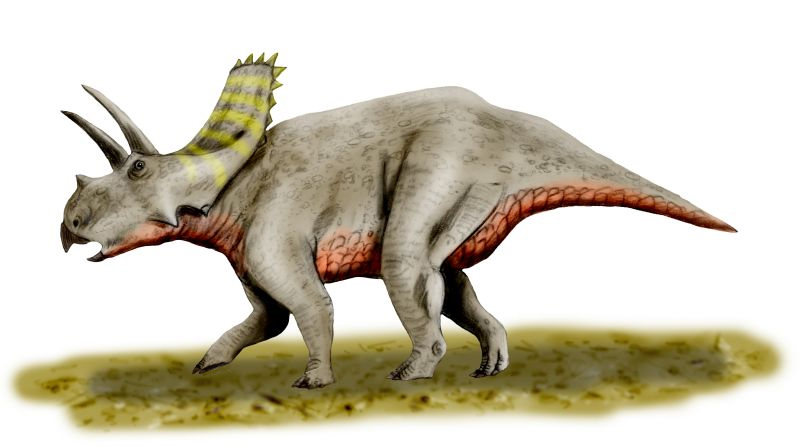
Arrhinoceratops was a genus of herbivorous ceratopsian dinosaurs that lived during the early Maastrichtian stage of the Late Cretaceous. The name means "noseless-faced," and its remains were found in Canada. It was known for a slightly distorted skull that lacked a lower jaw, as described by W. A. Parks in 1925. They roamed North America and Asia during the Cretaceous period about 65 million years ago. 

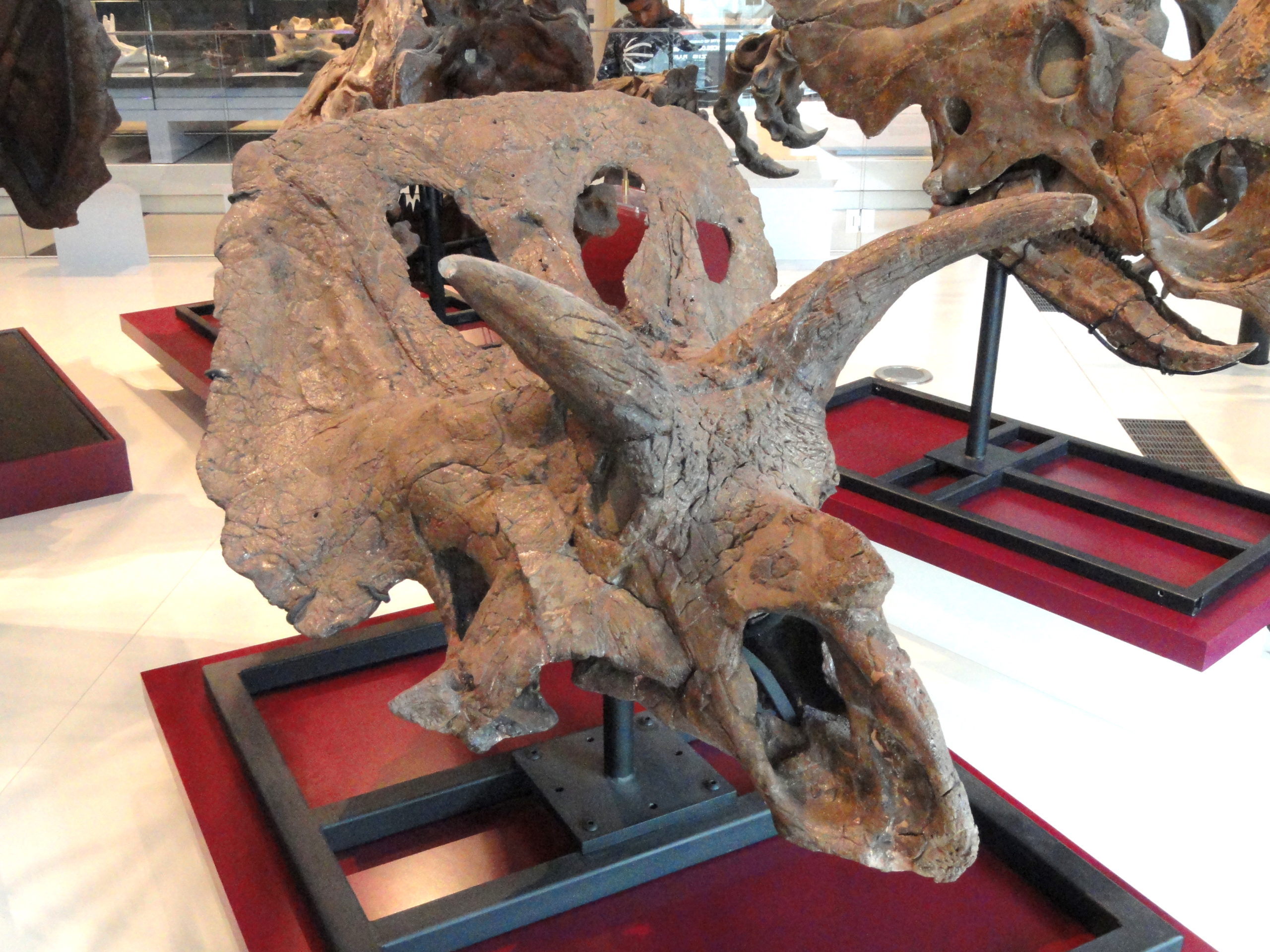
It belonged to the Ceratopsinae within the Ceratopsia, a group of parrot-beaked herbivorous dinosaurs. It has moderately long horns on the forehead and a shorter, blunter nose compared to most ceratopsians. It has a broad, square neck with two oval-shaped openings. The rear edge of the frill is slightly scalloped, while about nine osteoderms adorn the sides of the frill.

It ate predominant plants of the time, such as ferns, cycads and conifers. It used its sharp ceratopsian beak to chew on leaves or needles. 

Arrhinoceratops were estimated to be 4.5 meters long and weighed 1.3 tons.

What did the Arrhinoceratops eat?

It was a herbivorous dinosaur than the plants of the time, such as ferns, cycads and conifers.

What does Arrhinoceratops mean?

The name Arrhinoceratops means "without a nose face".

Who found Arrhinoceratops?

A slightly distorted, crowded skull lacking a lower jaw was known to have been described by W. A. Parks in 1925.

Where did they live?

When did they live?

What was your diet?

Who discovered them?

What kind of dinosaurs are they?

What type of species are they?

  • "Arrhinoceratops." In: Dodson, Peter & Britt, Brooks & Carpenter, Kenneth & Forster, Catherine A. & Gillette, David D. & Norell, Mark A. & Olshevsky, George & Parrish, J. Michael & Weishampel, David B. The Age of Dinosaurs. Publications International, LTD. p. 127. ISBN 0-7853-0443-6.
  • Paul, G.S., 2010, The Princeton Field Guide to Dinosaurs, Princeton University Press p. 267
  • Dodson, P. (1996). The Horned Dinosaurs. Princeton University Press, Pinceton, New Jersey, pp. xiv-346.
  • Parks, W.A. (1925). "Arrhinoceratops brachyopsa new genus and species of Ceratopsia from the Edmonton Formation of Alberta". University of Toronto Studies, Geology Series 19:1-15
  • Hunt, R.K. and Lehman, T.M. (2008). "Attributes of the ceratopsian dinosaur. Torosaurusand new material from the Javelina Formation (Maastrichtian) of Texas". Journal of Paleontology 82(6): 1127-1138.
  • C.W. Gilmore, 1946, "Reptilian fauna of the North Horn Formation of central Utah", United States Department of the Interior Geological Survey Professional Paper 210-C: 29-53
  • D.A. Lawson, 1976, "Tyrannosaurus and TorosaurusMaestrichtian dinosaurs from Trans-Pecos, Texas", Journal of Paleontology 50(1): 158-164
  • Tyson, H., 1981, "The structure and relationships of the horned dinosaur. Arrhinoceratops Parks (Ornithischia: Ceratopsidae)." Canadian Journal of Earth Sciences 18: 1241-1247
  • Farke, A.A., 2007, "Cranial osteology and phylogenetic relationships of the chasmosaurine ceratopsid. Torosaurus latus", pp 235-257 in: K. Carpenter (ed.), Horns and Beaks: Ceratopsian and Ornithopod DinosaursBloomington, Bloomington, Indiana University Press
  • R.S. Lull, 1933, "A revision of the Ceratopsia or horned dinosaurs", Memoirs of the Peabody Museum of Natural History 3(3): 1-175
  • P. Dodson and P.J. Currie, 1990, "Neoceratopsia". In: D.B. Weishampel, H. Osmolska, and P. Dodson (eds.), The Dinosauria. First Edition. University of California Press, Berkeley, pp 593-618
  • Scott D. Sampson; Mark A. Loewen; Andrew A. Farke; Eric M. Roberts; Catherine A. Forster; Joshua A. Smith; Alan L. Titus (2010). Smith; Alan L. Titus (2010). "New Horned Dinosaurs from Utah Provide Evidence for Intracontinental Dinosaur Endemism.". In Stepanova, Anna, ed. PLoS ONE 5 (9): e12292. PMC 2929175. PMID 20877459. doi:10.1371/journal.pone.0012292. 
geological time 3

Fun Facts

  • Arrhinoceratops was a genus of herbivorous ceratopsian dinosaurs.
  • The name Arrhinoceratops means "without a nose face".
  • It was a plant-eating dinosaur.
  • He walked on all fours. 
  • It belonged to a group of parrot-beaked dinosaurs.

More to Explore!

en_USEnglish

Pin It on Pinterest

Share This

Warning: Undefined array key "paged" in /nas/content/live/abcdino1/wp-content/themes/astra-child/functions.php on line 41