
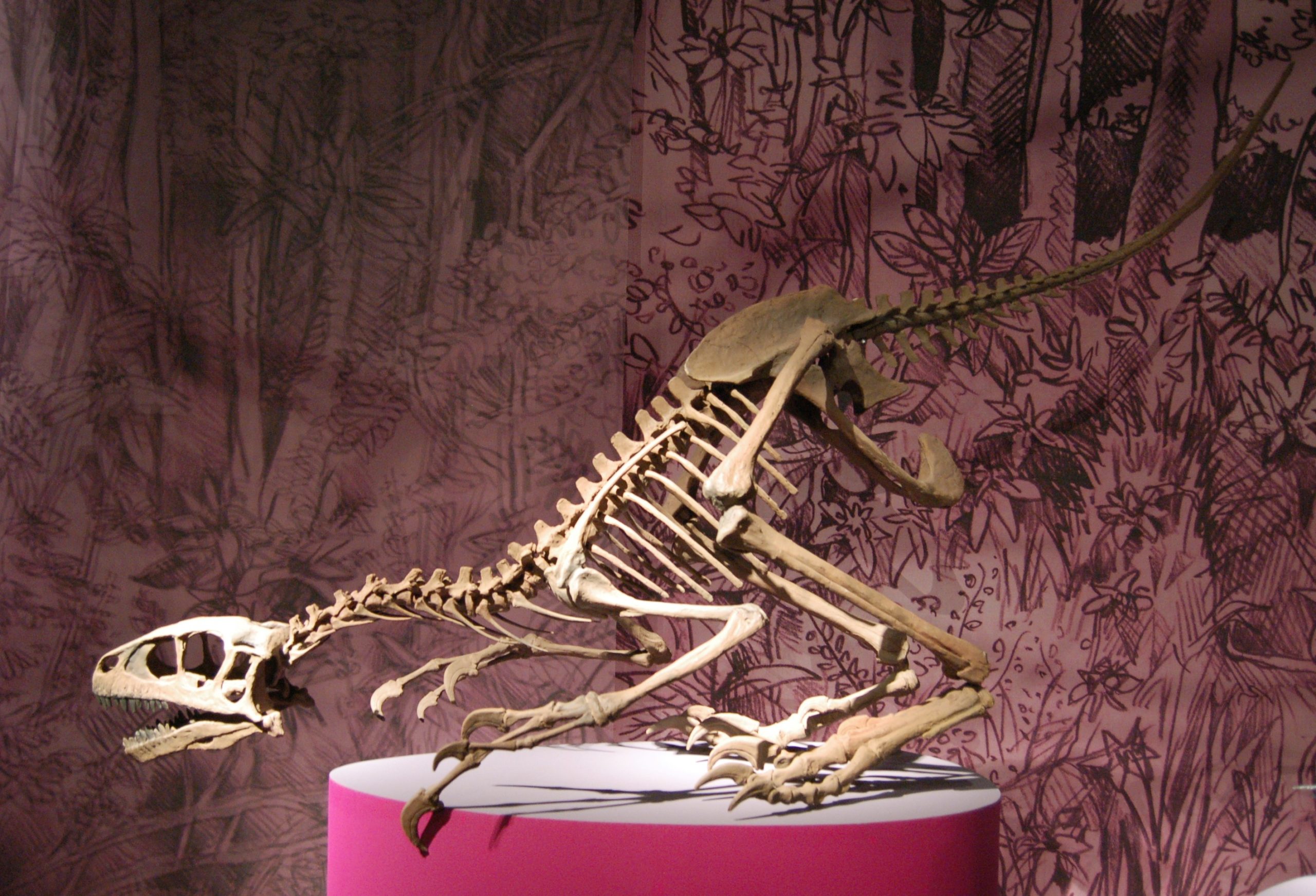


Unenlagia was a genus of dromaeosaurid theropod dinosaur that lived in South America during the Late Cretaceous. It was discovered in 1996 in the Sierra del Portezuelo and named by Fernando Emilio Novas and Pablo Puerta as Unenlagia comahuensis.
It was a flightless bird-like dinosaur that was discovered. It was the size of an ostrich but shaped like a velociraptor. Its arms were flexible and could move down and up to make a flapping motion. It has forearms and short claws like wings, which led scientists to discover how this new fossil helps dinosaur forearms evolve into the wings of today's birds. It could not fly like modern birds because its wing-like arms were too short to support the heavy dinosaur. However, its short wings were used to balance, turn and lift some weight during high-speed races.
The size of Unenlagia was uncertain. However, Thomas Holtz has estimated Unenlagia to be 2.3 m long and weighed 9.1-22.7 kg.
Unenlagia was a dinosaur that ate half-bird meat during its time.
Unenlagia means "half bird" in reference to its appearance.
It was discovered in 1996 in the Sierra del Portezuelo and named by Fernando Emilio Novas and Pablo Puerta as Unenlagia comahuensis.
Unfortunately no, despite its bird-like appearance, its wings were too short to fly. However, their short wings were used to balance, turn and lift their heads a little during high-speed races.


 English
  Español
  Español de México
  Español de Colombia