


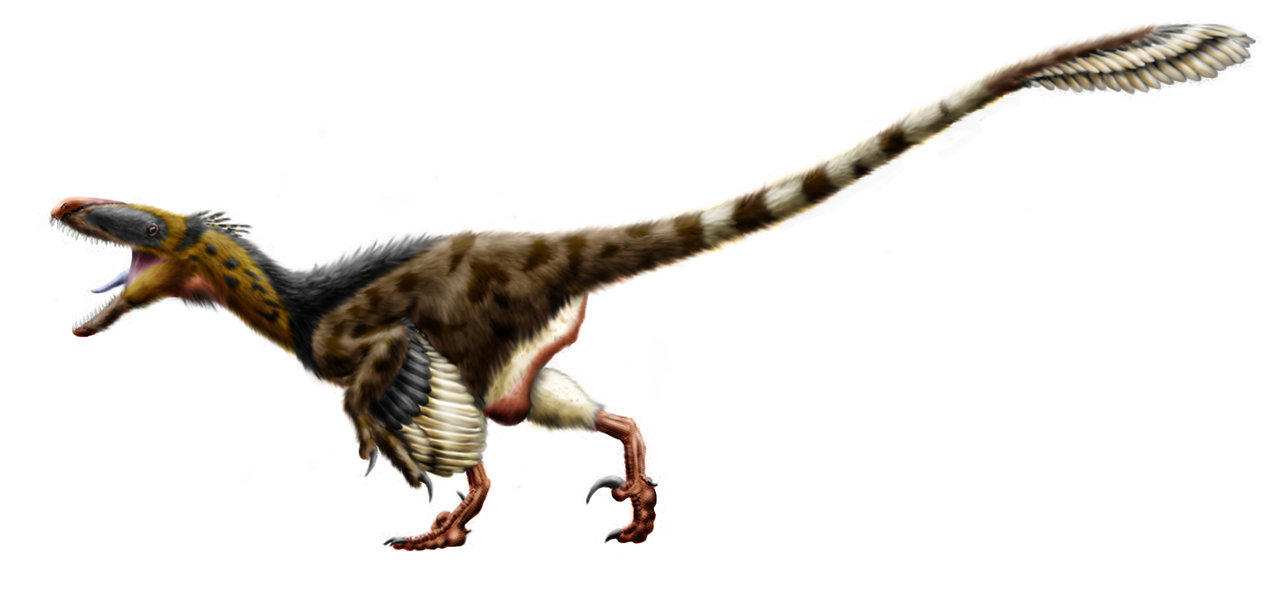


Achillobator was a genus of large theropod dromaeosaurid dromaeosaurid dinosaurs from the Late Cretaceous period of what is now Mongolia, about 100.5 million years ago - 83.6 million years ago.
They were named by paleontologist Altangerel Perle and American paleontologists Jim Clark and Mark Norell 10 years after they were found in the late 1980s. The name Achillobator means "Hero of Achilles", derived from a combination of Greek and Mongolian words.
One of the most deadly and life-threatening weapons is the sickle-shaped claw on the second toe of each hind leg to cut its prey. It was an active biped or ran on two legs. Achillobator was a distant relative of modern birds, it looked like a bird, but could not fly. It could run at a fairly good speed. Achillobator distinguished features that made it stand out; it had a strange hip alignment that distinguished it from birds of prey like Velociraptor; thus leading many scientists to believe it was an entirely new form of dinosaur. They were deep-bodied, relatively short-armed animals with stout, robust hind limbs.
They were among the largest dromaeosaurs, about 6 m long and weighing between 227 and 250 kg.
Achillobator was a carnivorous dinosaur that fed on herbivorous animals using its deadly sickle-shaped claw on the second toe of each hind leg to cut its prey.
The name Achillobator means "Hero of Achilles", derived from a combination of Greek and Mongolian words.
They were among the largest Dromaeosaurs, about 6 m long and weighed between 227 and 250 kg.
Acylobator was a genus of large theropod dromaeosaurid dinosaurs from the Late Cretaceous period of what is now Mongolia, about 100.5 million years ago - 83.6 million years ago.


 English
  Español
  Español de México
  Español de Colombia