Warning: Undefined array key "paged" in /nas/content/live/abcdino1/wp-content/themes/astra-child/functions.php on line 41

Warning: Undefined array key "paged" in /nas/content/live/abcdino1/wp-content/themes/astra-child/functions.php on line 41
El Paralititan - Dinosaur - Learn More | ABCDino
Warning: Undefined array key "paged" in /nas/content/live/abcdino1/wp-content/themes/astra-child/functions.php on line 41

Paralititan

To the best of our knowledge images are available by CC.

Learn more about Paralititan

Quick Facts
NameParalititan
Diet
Weight47000 kilos
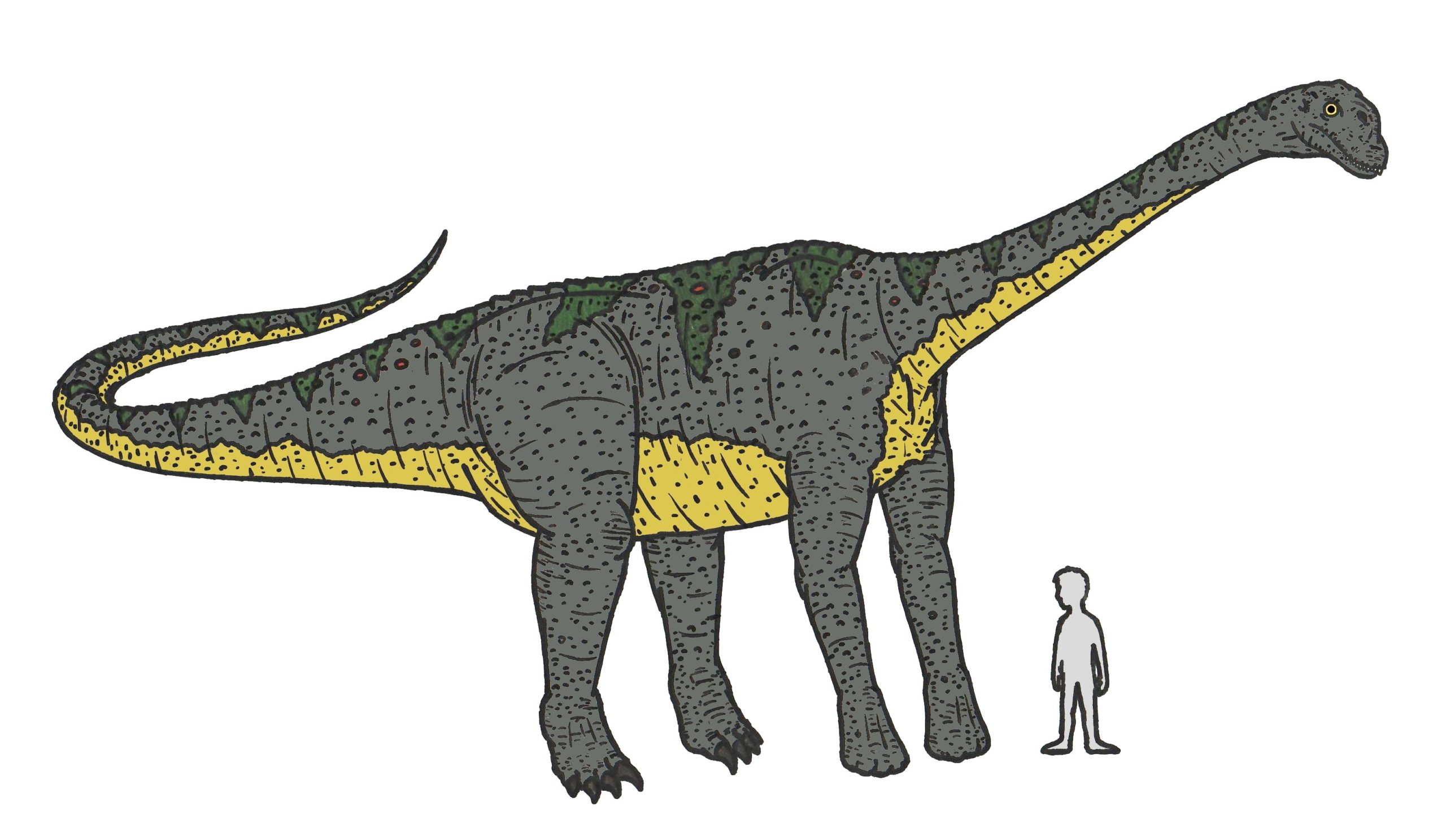
Length28 meters
Height9 meters
Period
Paralititan
Human

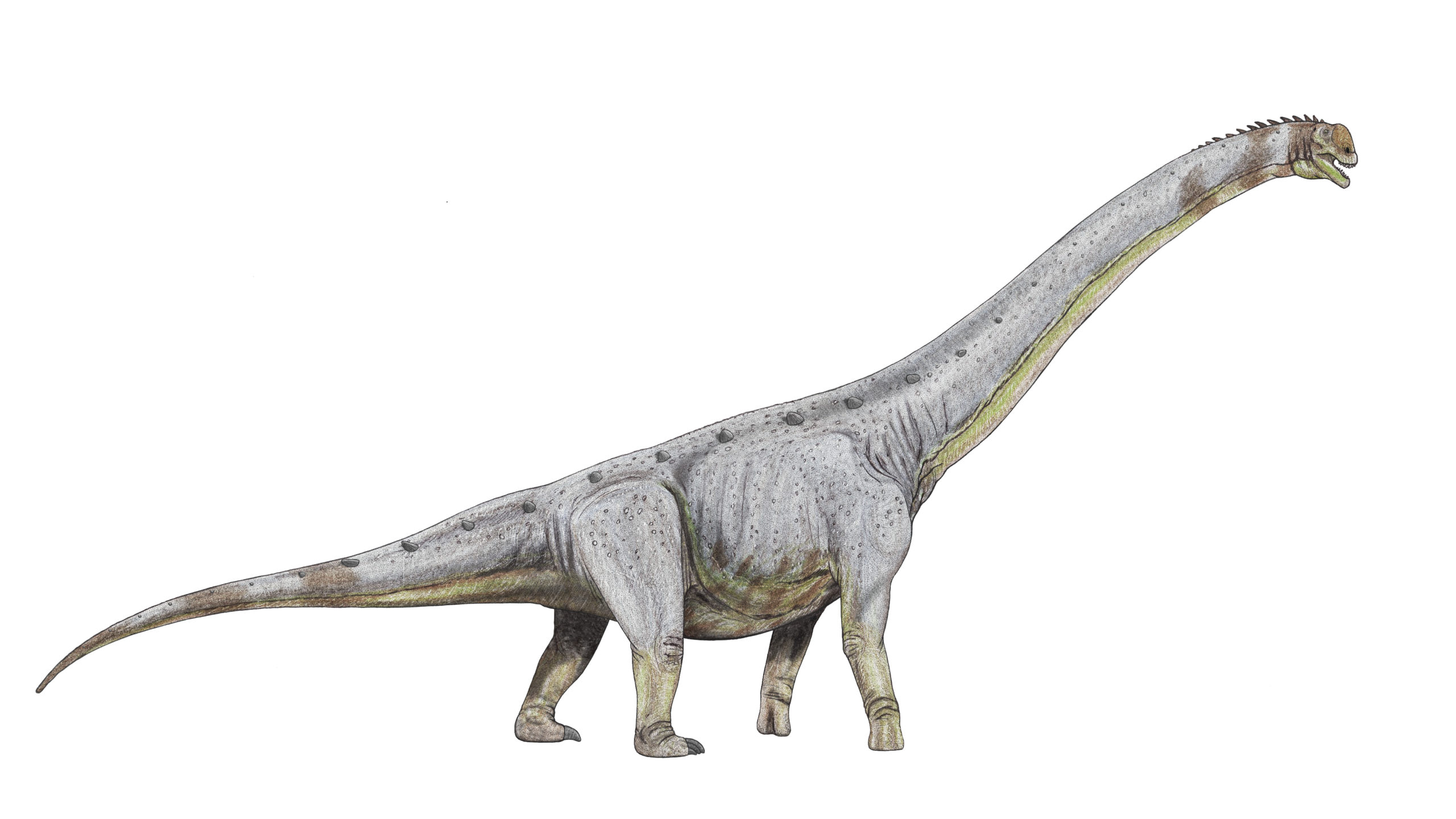
Paralititan was a giant titanosaurian sauropod dinosaur that lived throughout the Cretaceous period between 98 and 93 million years ago. It was discovered in the Upper Cretaceous coastal deposits of the Bahariya Formation in Egypt. It was known to have the largest humerus bone of any Cretaceous dinosaur. The name means "Titan of the tide," in reference to Paralititan's large size.

Paralititan was one of the largest dinosaurs that ever lived with an estimated weight of 59 tons. It had a long neck that could quickly reach the highest parts of trees. It had a considerable gut used to digest large amounts of plant material. It had a wide stance and walked on four legs. It had osteoderms designed to defend itself from attack by predators. 

It was also possible that Paralititan was hunted by huge predatory dinosaurs such as Carcharodontosaurus that lived at the same time.

What did Paralititan eat?

Paralititan was a huge herbivorous dinosaur that ate large quantities of plant material.

What does Paralititan mean?

The name Paralititan means 'Titan of the tide', in reference to Paralititan's large size. 

Where was the Paralititan found?

Paralititan was discovered in the Upper Cretaceous coastal deposits of the Bahariya Formation in Egypt.

Where did they live?

When did they live?

What was your diet?

Who discovered them?

What kind of dinosaurs are they?

What type of species are they?

How are they classified?

  • Holtz, Thomas (2012). Genus List for Holtz (2007) Dinosaurs:The Most Complete, Up-to-Date Encyclopedia for Dinosaur Lovers of All Ages. Accessed June 10, 2016. 
  • Smith, J.B.; Lamanna, M.C.; Lacovara, K.J.; Dodson, P.; Smith, J.R.; Poole, J.C.; Giegengack, R.; Attia, Y. (2001). "A Giant sauropod dinosaur from an Upper Cretaceous mangrove deposit in Egypt". Science 292 (5522): 1704-1706. PMID 11387472. doi:10.1126/science.1060561. 
  • Burness, G.P. and Flannery, T. (2001). "Dinosaurs, dragons, and dwarfs: The evolution of maximal body size." Proceedings of the National Academy of Sciences, 98(25): 14518-14523.
  • Carpenter, K. (2006). "Biggest of the big: a critical re-evaluation of the mega-sauropod". Amphicoelias fragillimus." In Foster, J.R. and Lucas, S.G., eds., 2006, Paleontology and Geology of the Upper Jurassic Morrison Formation. New Mexico Museum of Natural History and Science Bulletin 36: 131-138.[1]
  • "Body size evolution". University of Michigan Museum of Paleontology. Accessed June 10, 2016. 
geological time 3

Fun Facts

  • Paralititan was a giant sauropod dinosaur titanosaur.
  • It had a long neck that could quickly reach the highest parts of trees.
  • It was discovered in the Upper Cretaceous coastal deposits of the Bahariya Formation in Egypt.
  • It had osteoderms designed to defend itself from attack by predators. 
  • It was a herbivore and walked on all fours.

More to Explore!

en_USEnglish

Pin It on Pinterest

Share This

Warning: Undefined array key "paged" in /nas/content/live/abcdino1/wp-content/themes/astra-child/functions.php on line 41