
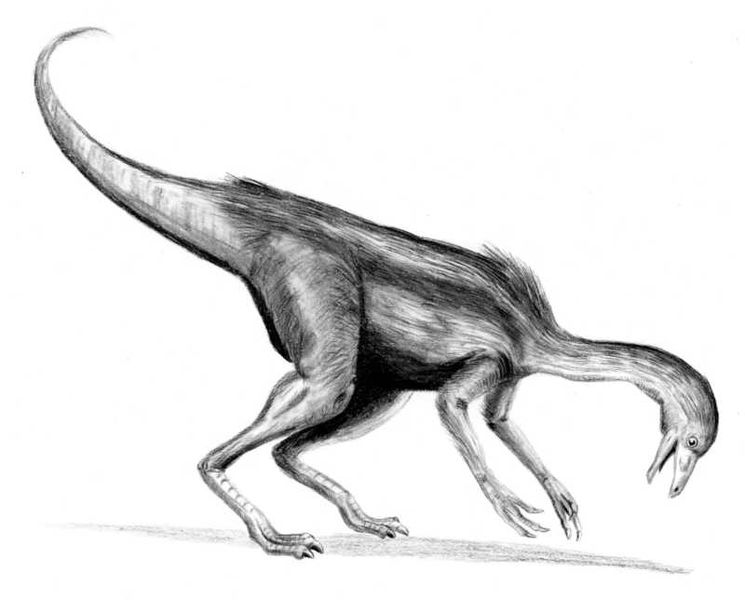
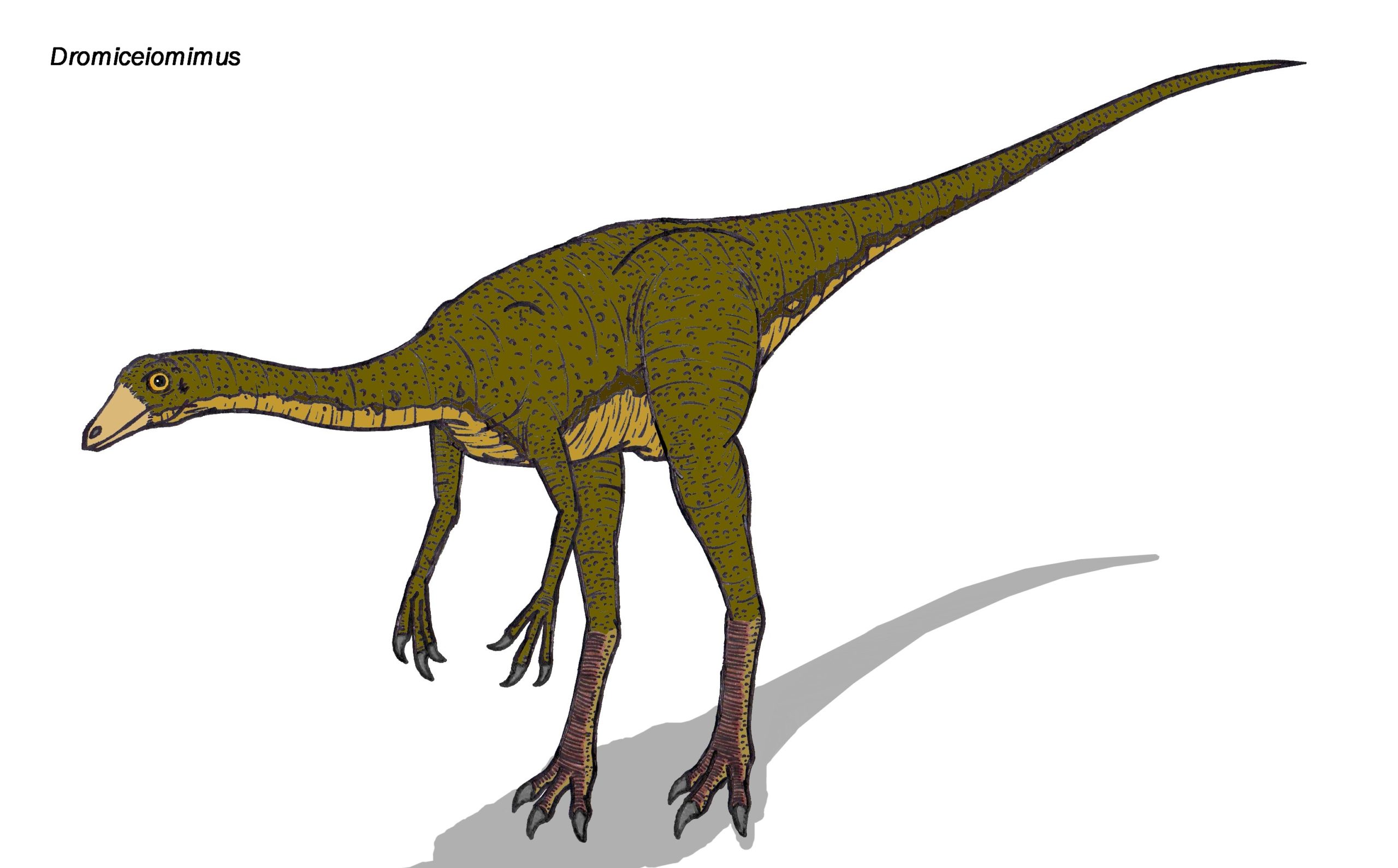


Dromiceiomimus was a genus of ornithomimid theropod from the Late Cretaceous epoch, about 75 to 70 million years ago. Fossils were found in the Horseshoe Canyon and Judith River Formation of Alberta. In 1972, it was named by a Canadian Museum of Nature paleontologist, Dale Russell and the type class is D. brevitertius. The name means "mimic emu" in reference to the resemblance of dinosaurs of this genus to the modern emu.
Dromiceiomimus was distinguishable from Ornithomimus but had much larger eyes and longer, thinner arms. Also, the hip bones were positioned differently. It had a fairly large brain, but they were not very intelligent. Its eyes were huge, giving them excellent vision. It was a bipedal runner that rivaled the modern ostrich in speed, running at speeds of up to 40-50 mph. It was probably omnivorous and ate fruits, large insects, and small lizards and mammals. It also had bird-like features, hollow bones, toothless jaws, and long legs. It had long forelimbs that were used to uncover small animals and eggs for food. The beaks were long and narrow, with turtle-like grooves, which were used to cut plant material.
The estimated size of Dromiceiomimus was approximately 3.5 m in length and weighed between 100 and 300 kg.
The name Dromiceiomimus means "mimic emu" in reference to the resemblance of dinosaurs of this genus to the modern emu.
The fossils were found in the Horseshoe Canyon and Judith River Formation of Alberta.
Dromiceiomimus was probably omnivorous and ate fruits, large insects and small lizards and mammals.


 English
  Español
  Español de México
  Español de Colombia