

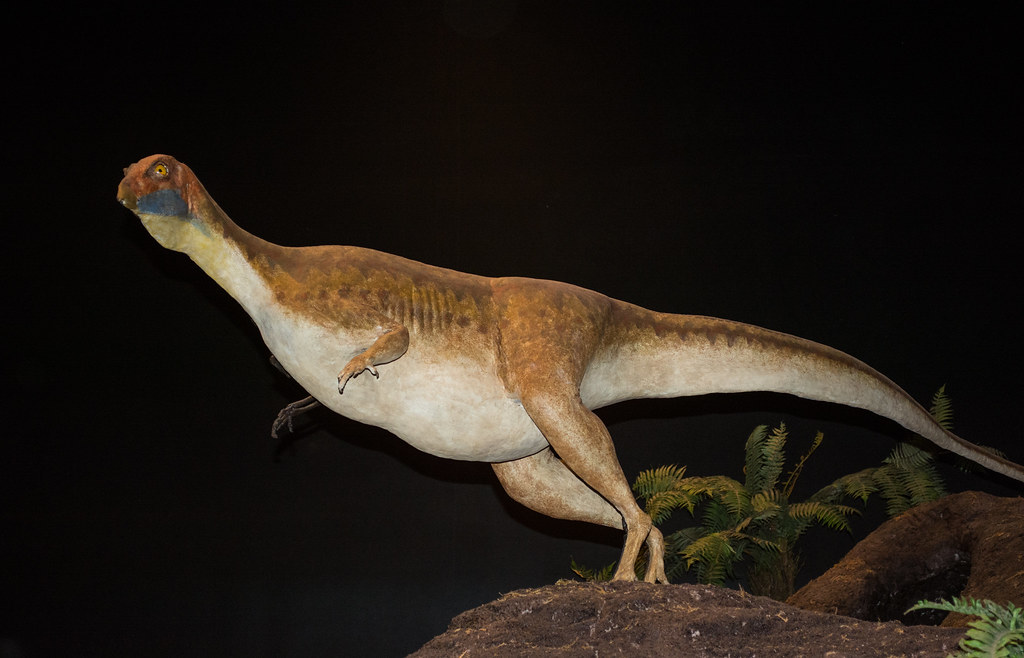
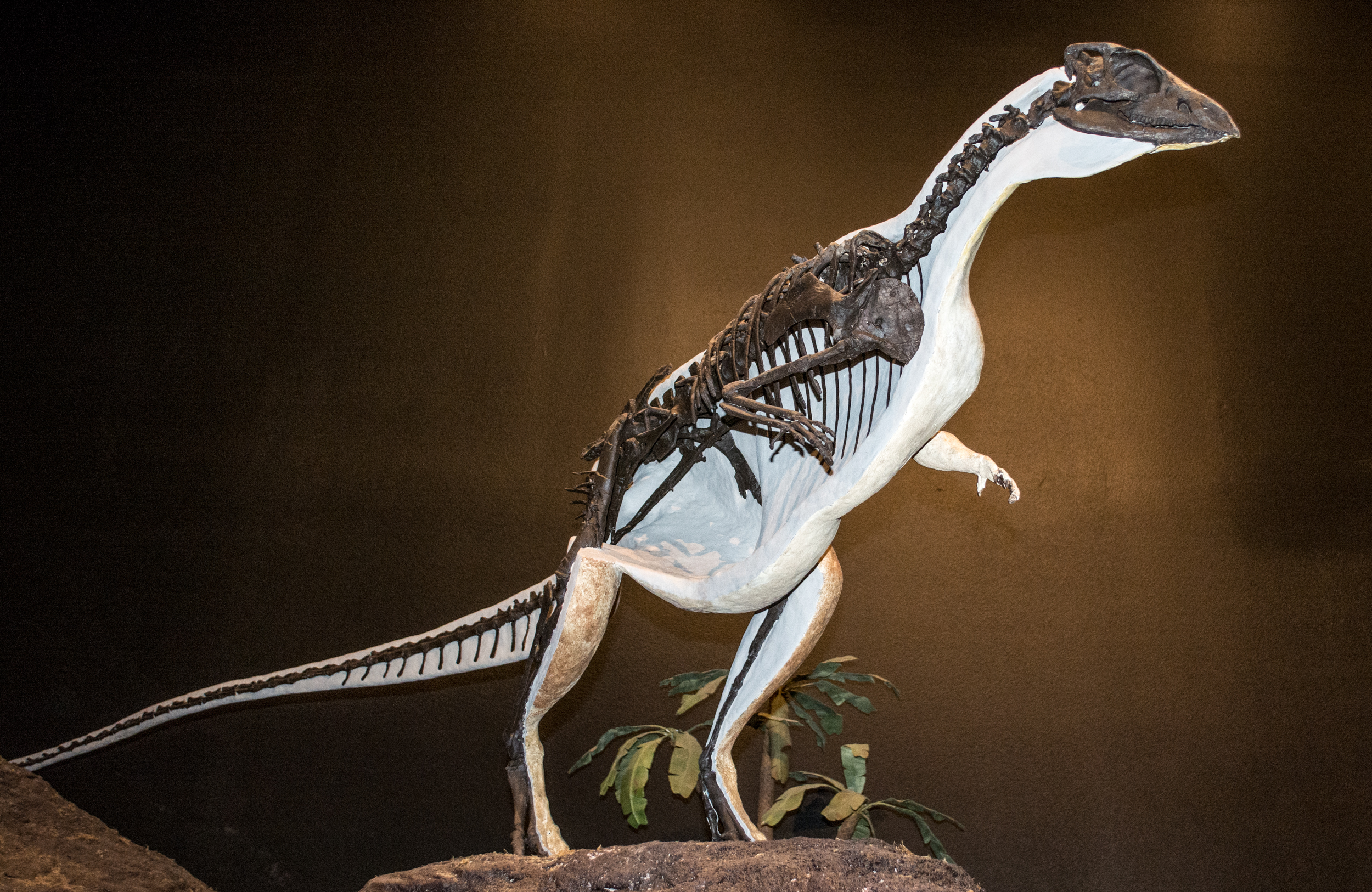
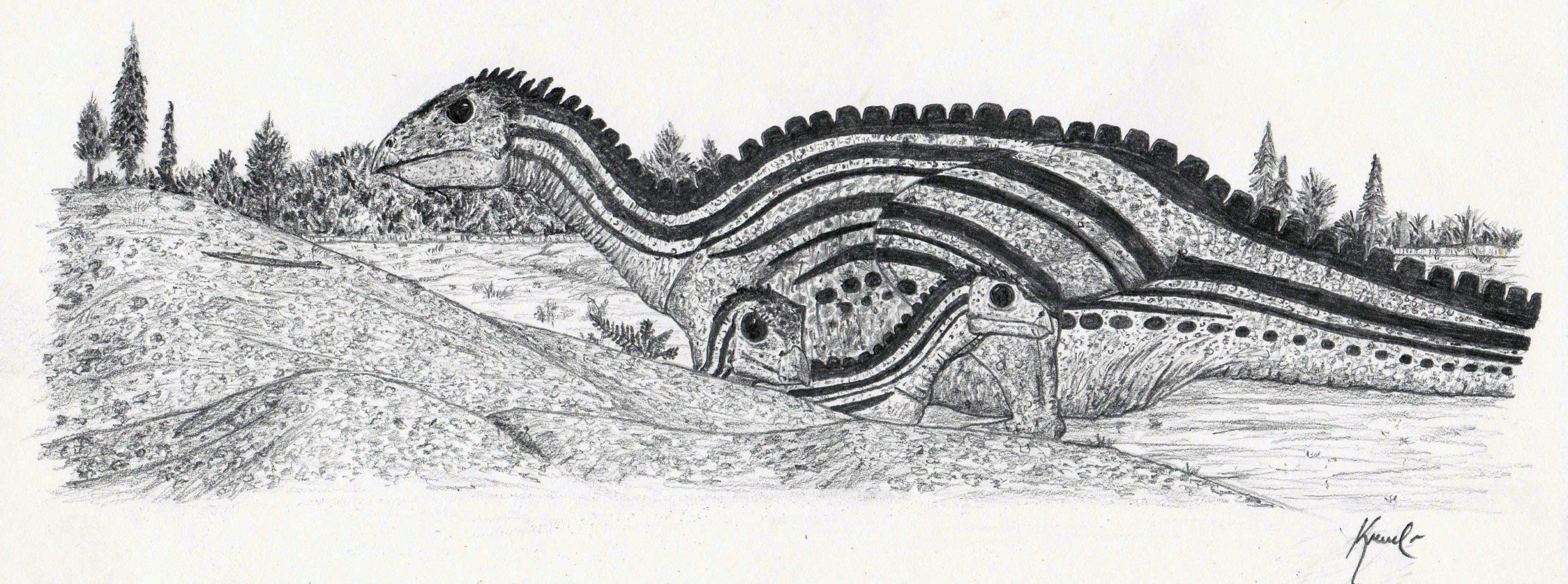


Oryctodromeus was a genus of small parkosaurid dinosaurs that lived in the Late Cretaceous about 95 million years ago. The remains were found in their burrow, along with the remains of 2 juveniles. The name Oryctodromeus means "digging runner". It was discovered by Dr. Anthony J. Martin and colleagues in 2007. It was a member of the fast herbivorous family Parksosauridae. Oryctodromeus was the first non-avian dinosaur to show evidence of digging behavior.
Oryctodromeus had a two-meter long burrow that was filled with sediment and was evidence that some dinosaurs had adapted to burrowing. It was a two-legged herbivore or biped. It had stout, muscular arms, shoulders and hips that were well suited to burrowing. It had a flexible tail that could curl underground, like rabbits, anteaters and hyenas. It lived in burrows to survive in adverse weather conditions and escape predators. It has a slender pelvis and a shoulder girdle. It dug with its strong forearms and sturdy shoulders, and may have pushed the soil with its snout. It was a small, but fast dinosaur.
Oryctodromeus was only 6.8 feet long, and weighed 70 pounds or about the size of a modern coyote.
The name Oryctodromeus means "digging runner".
The remains of oryctodromeus were found in the Middle Cretaceous Blackleaf Formation of southwestern Montana and in the Wayan Formation of southeastern Idaho, USA.
The oryctodromeus lived during the Middle Cretaceous, about 95 million years ago.
It was discovered by Dr. Anthony J. Martin and colleagues in 2007.
Orthicodromes were herbivores, so their main food was plants or vegetables.


 English
  Español
  Español de México
  Español de Colombia