
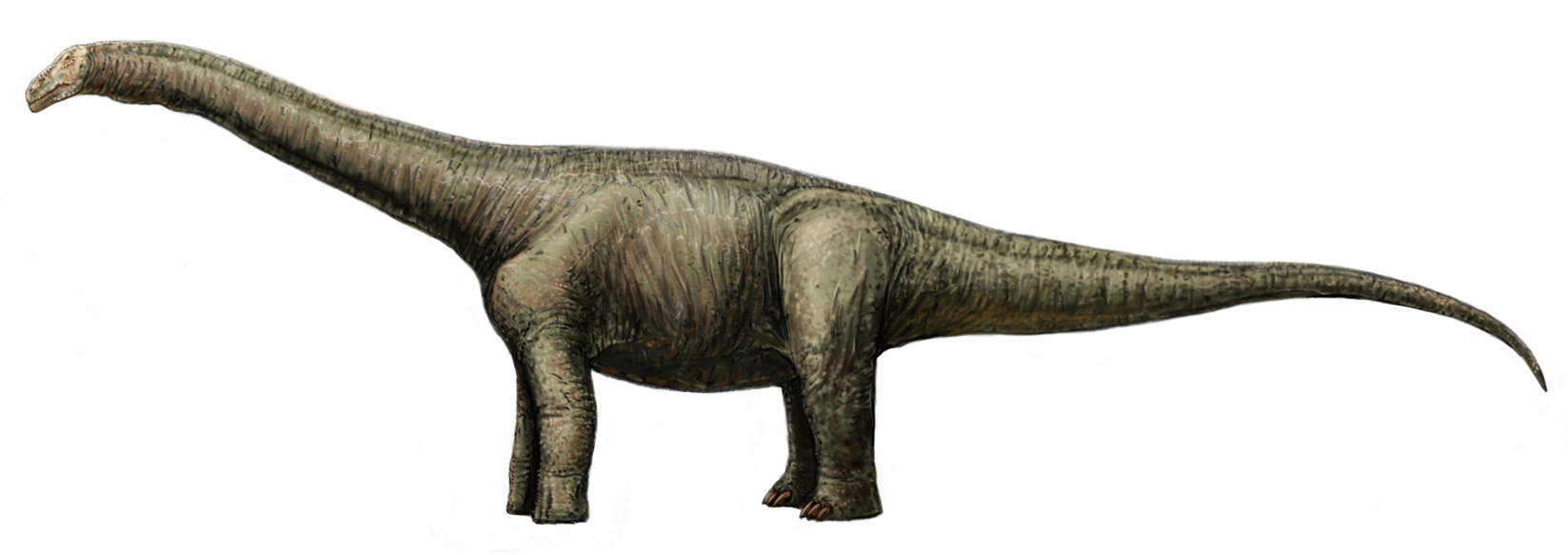
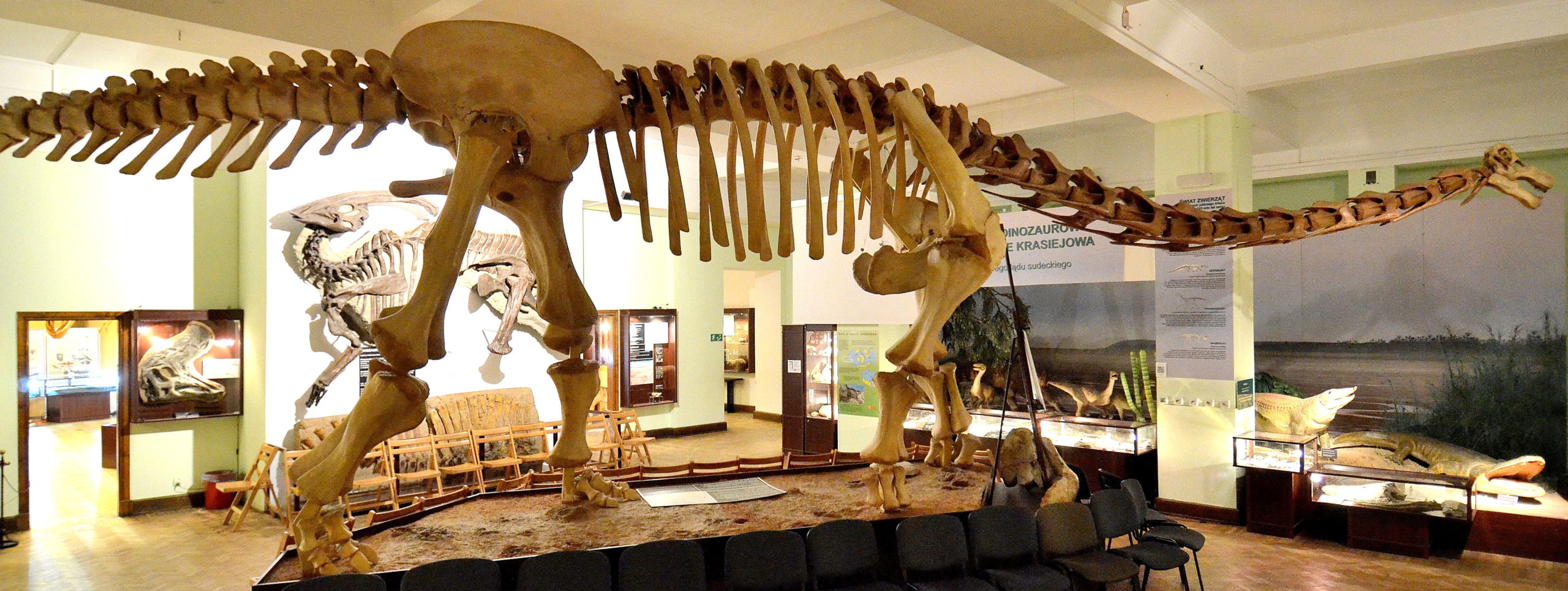


Opisthocoelicaudia was a genus of sauropod dinosaur that lived in the Late Cretaceous. In 1965, it was discovered by scientists on one of the numerous Polish-Mongolian paleontological expeditions in the Nemegt Basin of the Gobi Desert in Mongolia. It was one of the best known sauropods of the Late Cretaceous. Its name means "tail with posterior cavity" in reference to its unusual feature in the vertebrae of the anterior half of the tail. It could help Opisthocoelicaudia to balance itself and unload some of its weight from its hind legs, or when reaching for taller plants and trees.
It was a terrestrial animal, although relatively small for a sauropod. The hips and tail were unusual when it stood on all four legs. Its body was straight from the neck to the beginning of the tail. According to scientists, most sauropods had an arched profile, probably due to tail specializations. It kept its tail well off the ground when it walked, and needed up to hundreds of kilograms of forage daily to meet its nutritional needs, like most sauropods.
Despite its enormous size, it weighed an estimated 30 tons and was 12 m long.
Opisthocoelicaudia was a herbivore that ate hundreds of kilograms of forage daily to meet its nutritional needs, like most sauropods.
The name means "tail with posterior cavity" in reference to its unusual feature in the vertebrae of the anterior half of the tail.
In 1965, it was discovered by scientists on one of the numerous Polish-Mongolian paleontological expeditions in the Nemegt Basin of the Gobi Desert in Mongolia.
Yes, like any other dinosaur of the time.


 English
  Español
  Español de México
  Español de Colombia