
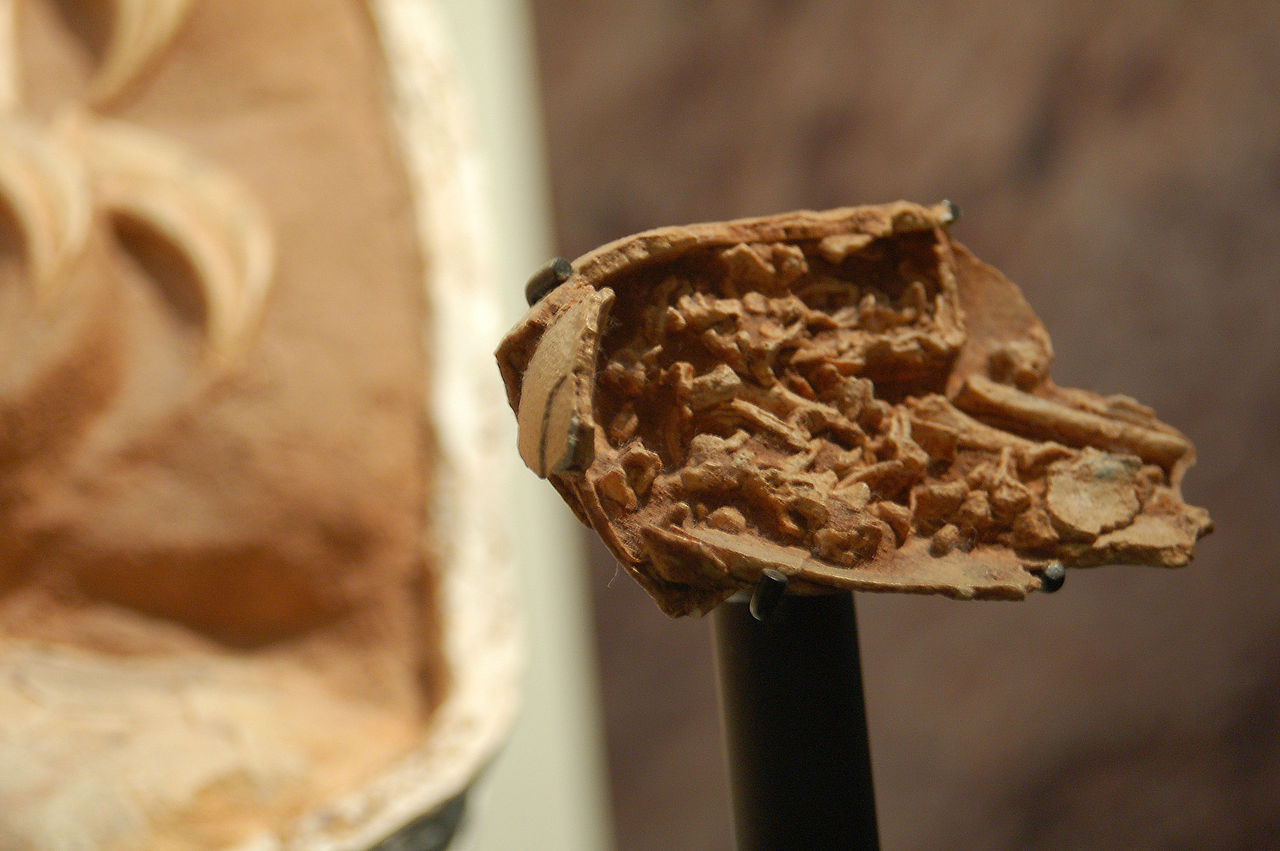


Citipati was a genus of oviraptorid theropod dinosaur from the Late Cretaceous period about 83.6 million years ago - 66 million years ago from what is now Mongolia. It belonged to a group of bird-like theropod dinosaurs that had toothless beaks and often had cassowary-like ridges on their heads.
Thanks to some well-preserved skeletons, including several specimens found that showed the eggs of this dinosaur were believed to have stolen their own nurturing eggs. The nesting specimens had helped solidify the link between non-avian dinosaurs and birds.
Compared to most other theropods, Citipati had an unusually long neck and a shortened tail. The skull was short and highly pneumatized, terminating in a robust toothless beak. Citipati's most distinctive feature was its high crest, similar to that of a modern cassowary. Scientists believed it was covered with feathers.
Citipati is formed from the Sanskrit words citi, meaning "funeral pyre" and pati, meaning "lord" or "lord of the funeral pyre". It was an omnivore, meaning that it probably ate both plants and animals. The arms were covered with feathers that protected and hid the eggs in the nest. It lived in a desert environment, with occasional dunes and oases. It also shared an environment with Byronosaurus, a troodont, and a cousin of Velociraptor.
Citipati were emu-sized animals and were the largest known Oviraptorids with an estimated length of 3 m and weight of 160 kg.
The Citipati was an omnivore, which means that it probably ate both plants and animals.
Citipati is formed from the Sanskrit words citi, meaning "funeral pyre" and pati, meaning "lord" or "lord of the funeral pyre".
Citipati was a genus of oviraptorid theropod dinosaur from the Late Cretaceous period about 83.6 million years ago, 66 million years ago from what is now Mongolia.
Citipati fossils had been found in places such as Ömnögovi (Mongolia).


 English
  Español
  Español de México
  Español de Colombia