Warning: Undefined array key "paged" in /nas/content/live/abcdino1/wp-content/themes/astra-child/functions.php on line 41

Warning: Undefined array key "paged" in /nas/content/live/abcdino1/wp-content/themes/astra-child/functions.php on line 41
The Brachytrachelopan - Dinosaur - Learn More | ABCDino
Warning: Undefined array key "paged" in /nas/content/live/abcdino1/wp-content/themes/astra-child/functions.php on line 41

Brachytrachelopan

To the best of our knowledge images are available by CC.

Learn more about Brachytrachelopan

Quick Facts
NameBrachytrachelopan
Diet
Weight9000 kilos
Length10 meters
Height
Period
Brachytrachelopan
Human

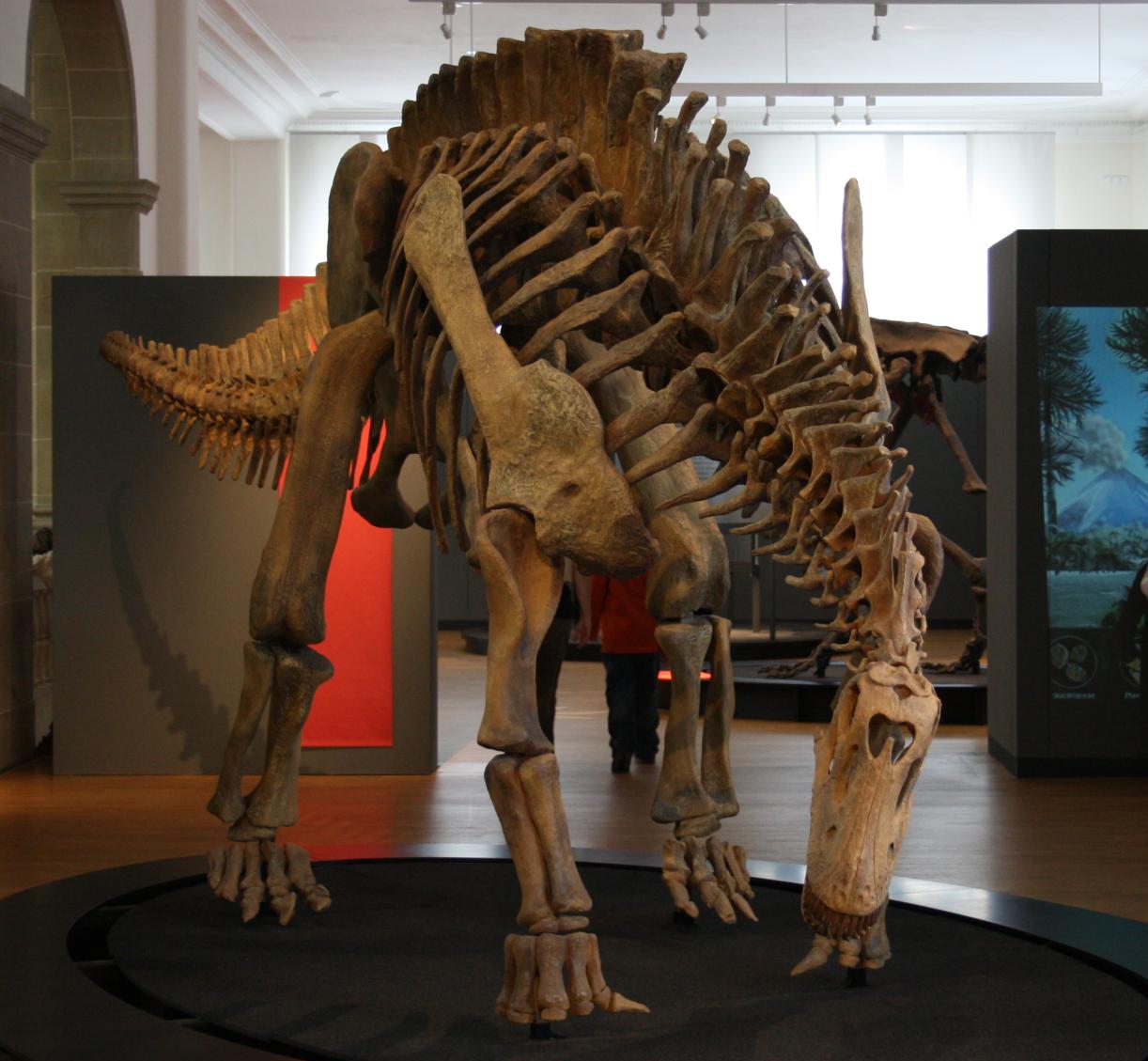
Brachytracheolpan was a short-necked sauropod dinosaur from the Late Jurassic period. This animal roamed what is now Argentina. The fossils discovered by a local herder, Daniel Mesa. In his honor, the name of the genus means "Short-necked bread", "Pan" in reference to the figure of the god Pan, the patron deity of the shepherd in Greek mythology.

It was small for a sauropod at approximately less than 10 meters in length and has the shortest neck of all known sauropods. It was a herbivorous dinosaur that specialized in low to medium vegetation. It stood on four legs and lived in a terrestrial habitat. Like any other dinosaur, the Brachitropod reproduced by laying eggs. 

What does the name Brachytrachelopan mean?

The generic name means "short-necked bread", "Pan" in reference to the figure of the god Pan, the patron deity of shepherds in Greek mythology.

What did the Brachytracheolpan eat?

It was an herbivorous dinosaur that specialized in low to medium altitude vegetation.

When did the Brachytracheolpan live?

Brachytracheolopan was a short-necked sauropod dinosaur from the Late Jurassic period.

Where did they live?

When did they live?

What was your diet?

Who discovered them?

What kind of dinosaurs are they?

What type of species are they?

  • Rauhut O.W.M., Remes K., Fechner R., Cladera G., Puerta P. (2005). Discovery of a short-necked sauropod dinosaur from the Late Jurassic period of Patagonia. Nature 435:670-672.
  • Taylor, M. P. & Wedel, M. J. 2013. Why sauropods had long necks; and why giraffes have short necks?. "PeerJ." 1, p. E36.
  • http://palaeos.com/vertebrates/glossary/glossaryO.html#Opisthocoelous
  • http://palaeos.com/vertebrates/glossary/glossaryP.html#Pleurocoel
  • http://palaeos.com/vertebrates/glossary/glossary.html#Amphicoelous
  • http://palaeos.com/vertebrates/glossary/glossaryP.html#Platycoelous
  • Whitlock, J. A., 2010: "Paleoecology and Systematics of the Diplodocoid Sauropods". The University of Michigan
  • Wings, O.; 2015; The rarity of gastroliths in sauropod dinosaurs-a case study in the Late Jurassic Morrison Formation, western USA. "Mitteilungen aus dem Museum für Naturkunde in Berlin. Fossil Record." 18, s. 1-16, DOI: 10.5194/fr-18-1-2015.
  • Schwarz-Wings, D.; 209; "Reconstruction of the thoracic epaxial musculature of diplodocid and dicraeosaurid sauropods". Journal of Vertebrate Paleontology".
  • Schwarz-Wings, D. & Böhm, N.; 2012; "A morphometric approach to the specific separation of the humeri and femora of. Dicraeosaurus from the Late Jurassic of Tendaguru, Tanzania." Acta Palaeontologica Polonica. 59 (1), s. 81-98, 2012. BioOne.
  • Sereno, P. C.; Wilson, J. A.; Witmer, L. M.; Whitlock, J. A.; Maga, A.; Ide, O.; Rowe, T. A.; 2007; "Structural Extremes in a Cretaceous Dinosaur. "PLoS ONE". DOI: 10.1371/journal.pone.0001230.
  • Taylor, M. P.; Naish, D.; 2005-09-15; "The phylogenetic taxonomy of Diplodocoidea (Dinosauria: Sauropoda). PaleoBios. 25 (2), s. 1-7.
  • Schwarz-Wings, D.; 2012; "The skull of Dicraeosaurus hansemanni (Late Jurassic, Tendaguru/Tanzania)". W: R. Royo-Torres, F. Gascó, & L. Alcalá: 10th Annual Meeting of the European Association of Vertebrate Palaeontologists.¡ Fundamental!, s. 235-238.
  • Carballido, J. L.; Garrido, A. C.; Canudo, J. I.; Salgado, L.; 2010; "Redescription of Rayososaurus agrioensis Bonaparte (Sauropoda, Diplodocoidea), a rebbachisaurid from the early Late Cretaceous of Neuquén." "Geobios. 43, s. 493-502.
  • Gallina, P. A.; Apesteguía, S.; Haluza, A.; Canale. J. I.; 2014; "A Diplodocid Sauropod Survivor from the Early Cretaceous of South America." PloS one, s. e97128.
  • Senter, P.; (2007); "Necks for sex: sexual selection as an explanation for sauropod dinosaur neck elongation." Journal of Zoology. 271 (1), s. 45-53.
  • Taylor, M. P.; Hone, D. W. E.; Wedel, M. J.;Naish. D.; (2011); "The long necks of sauropods did not evolve primarily through sexual selection." Journal of Zoology. 285 (2), s. 150-161.
  • Preuschoft, H.; Klein, N.; (2013); "Torsion and Bending in the Neck and Tail of Sauropod Dinosaurs and the Function of Cervical Ribs: Insights from Functional Morphology and Biomechanics." PloS one. 8, s. e78574.
  • | Brachytrachelopan on the Dino Directory site of the American Museum of Natural History
  • Volkheimer, W.; Gallego, O. F.; Cabaleri, N. G.; Armella, C.; Narváez, P. L.; Silva Nieto, D. G.; Páez, Manuel A.; (2009) ; "Stratigraphy, palynology, and conchostracans of a Lower Cretaceous sequence at the Cañadón Calcáreo locality, Extra-Andean central Patagonia: age and palaeoenvironmental significance." Cretaceous Research. 30 (1), s. 270-282.
  • López-Arbarello, A.; Sferco, E.; Rauhut, O. W. M.; ( 2013); "A new genus of coccolepididid fishes (Actinopterygii, Chondrostei) from the continental Jurassic of Patagonia". Palaeontologia Electronica" Palaeontological Association
geological time 3

Fun Facts

  • The genus name means "short-necked bread".
  • It was discovered by a local pastor, Daniel Mesa.
  • It stood on four legs.
  • It was a dinosaur-eating plant.

More to Explore!

en_USEnglish

Pin It on Pinterest

Share This

Warning: Undefined array key "paged" in /nas/content/live/abcdino1/wp-content/themes/astra-child/functions.php on line 41